

Many AI and software vendors ask the person accepting their terms to confirm they can commit their organization. Perplexity’s Terms of Service ask anyone using the service for a company to represent and warrant that they have “authority to bind the entity” and accept on its behalf. That language sits in the terms for Perplexity’s websites. Its API and enterprise products are governed by separate terms. Microsoft’s Microsoft 365 Copilot APIs terms ask for a similar representation. That is the authority-to-bind clause, and it gets harder to apply when an AI agent does the clicking.
Short answer. An AI agent can take part in forming an electronic contract without becoming a legal party itself. Under E-SIGN and state electronic-transactions law, its actions may be attributed to the person or organization to be bound, but attribution is not automatic. An employee having authority, an agent having technical permission to click, and an organization being legally bound are three separate questions. The deploying organization may face contractual responsibility when the agent’s actions are attributable to it. Whether the AI provider also bears responsibility depends on the provider agreement and applicable law. An authority-to-bind clause makes the signer’s claim explicit but does not prove it.
What the clause says
Vendors word the clause differently. These examples are illustrative, not a survey:
- Perplexity has the user represent and warrant that they are an authorized representative who can bind the entity. The same document contains an arbitration clause and class-action waiver, which shows what a signer may be committing the organization to.
- Molin AI says that if you use the services for an organization, you warrant you can bind it.
- Obot tells anyone without that authority not to accept the agreement or use the software.
- Agoragentic adds an agent-specific line: you are responsible for outcomes of agent actions taken with your credentials or under your authority.
A work email address does not by itself show that someone accepted for their employer. The questions are whether the signer purported to act for the organization, whether the organization granted authority, and whether its conduct led the vendor to reasonably believe so.
What the clause does legally
Vendors cannot practicably verify a signer’s title in real time. The clause works as a risk allocation and as a written statement the vendor can point to if authority is later contested. The sources reviewed identify no court decision that has tested the clause in an AI-agent setting.
The clause also matters to the signer. Under Restatement (Third) of Agency § 6.10, someone who purports to contract for another without power to do so may face personal liability. The theory is an implied warranty of authority. Exceptions apply. A Virginia circuit court applied the principle in Pillar Investment, LLC v. QDEF 16 LLC (Fairfax County, CL-2020-20807), a case about human signers, not AI agents. Whether it reaches an agent’s click is untested. The doctrine applies most naturally to the person who signs, or who configures an agent to accept terms.
Can an AI agent accept terms and bind its operator?
US law recognizes automated contracting, with conditions:
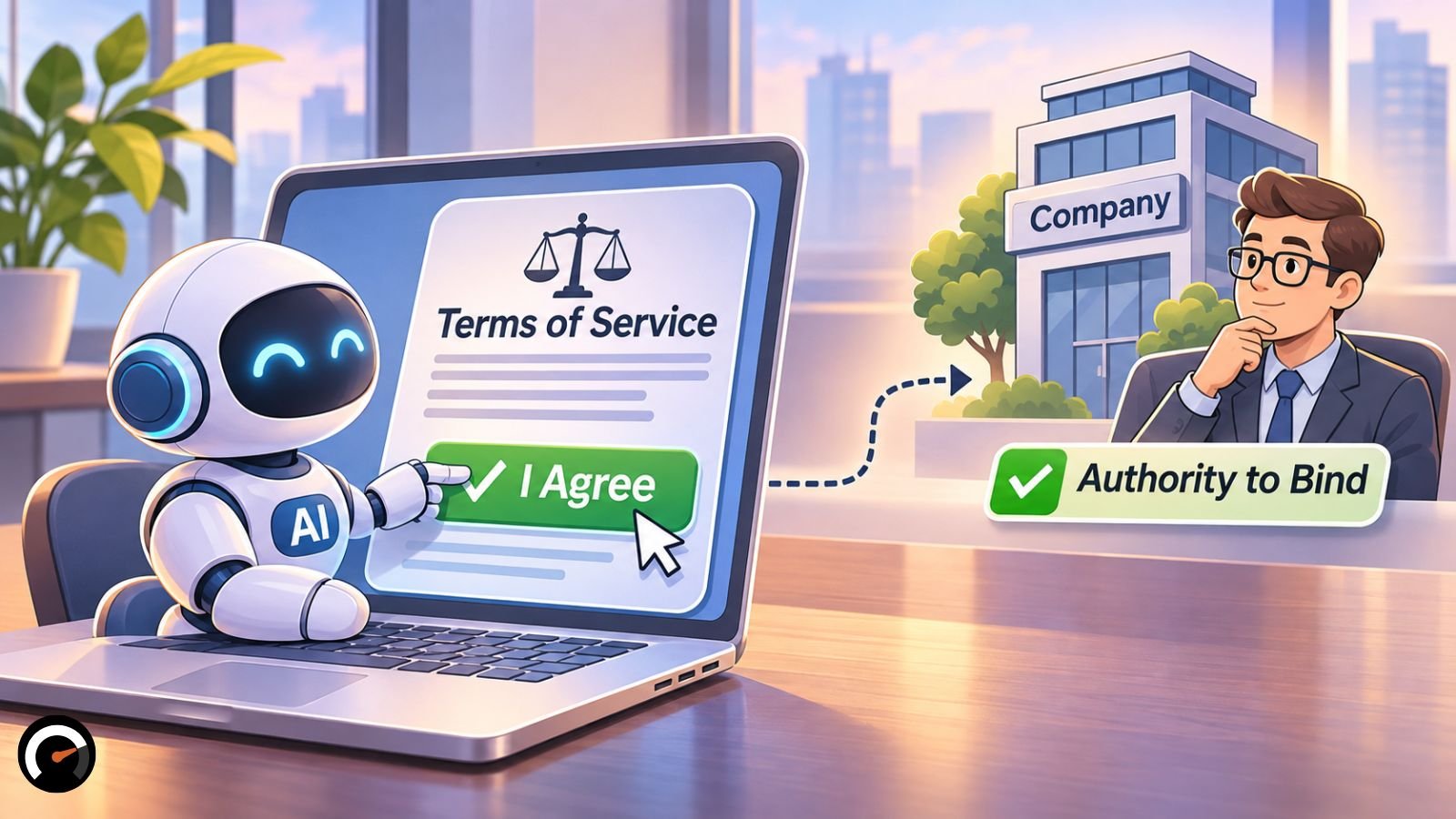
- E-SIGN. Under 15 U.S.C. § 7001(h), a contract involving an electronic agent cannot be denied legal effect solely because the agent participated in its formation, provided the agent’s action is legally attributable to the person to be bound. The provision recognizes electronic-agent contracting. It does not establish the person’s authority.
- UETA § 14. According to Astraea Law, a contract can form between electronic agents even if no individual reviewed the actions or terms. Proskauer notes that UETA’s prefatory note says it is not a general contracting statute, so notice, assent and enforceability still follow ordinary rules.
- UETA § 9 (attribution). An electronic act is attributable to a person if it was that person’s act, which may be shown in any manner, including through a security procedure. Its effect depends on the context and circumstances. This is the provision that connects an agent’s click to the organization.
- UETA § 5(b). UETA applies where the parties have agreed to transact electronically. That agreement needs no formal document and can be implied from conduct. An online signup is evidence of it, but the circumstances still matter.
- Assent. Proskauer observes that a human click can be an effective signature if notice and assent are met, and that hidden “browsewrap” terms are a common reason online terms fail. Whether an agent’s click shows assent is untested.
- New York. Proskauer also notes that New York did not enact UETA. Its Electronic Signatures and Records Act does not expressly mention electronic agents but does not prohibit them, and E-SIGN’s provision may fill the gap.
- Still untested. Astraea says it knows of no court that has applied these provisions to a generative AI agent.
UETA’s error provision is narrow
UETA § 10(2) gives a limited remedy to an individual who makes an error while dealing with another person’s electronic agent. As enacted in Minnesota, the individual must have had no opportunity to prevent or correct the error and must promptly notify the other party that they did not intend to be bound. The individual must also take reasonable steps to return or destroy the consideration and must not have used or received any benefit from it. It protects individuals dealing with someone else’s agent, not a company whose own agent makes a mistake.
Electronic agents versus legal agents
In E-SIGN and UETA, an “electronic agent” is automated software acting for a person, and the contract is attributed to the person or organization using it. In agency law, an “agent” is a person or entity with power to act for a principal. The overlap in wording invites confusion, and the AI industry uses the vocabulary loosely too: even agentic and agentive AI have no formal definitions. Calling software an agent does not create an agency relationship. Agency doctrines mostly operate on the human or organization that deploys the software.
Who has authority to bind an organization?
Three agency doctrines matter, mainly as applied to the human or organization that deploys the agent. How they apply to the software itself is unsettled.
- Actual authority: the organization genuinely authorized the person to act.
- Apparent authority: authority a third party reasonably believes someone has because of manifestations by the organization, such as representations, communications and conduct. Thoughtworks describes it as turning on signals from the enterprise, including title, channel, disclosures and conduct. An AI interface or title alone does not establish it. Giving an agent credentials or a payment card may be among the manifestations a vendor would point to, but no source reviewed tests that. An organization telling vendors its agent may purchase software is a stronger signal than one letting the agent merely correspond with them.
- Ratification: the organization later adopts an act nobody authorized, for example by knowingly using the service.
Technical permission is not legal authority

An agent may be able to click “accept” without the organization having authorized the agreement. Take a company that lets an agent research software vendors but not buy anything. The agent reaches a vendor’s signup page and accepts a subscription anyway. The dispute turns on attribution, the scope of delegated authority, and what the vendor reasonably understood. One practitioner analysis notes that a company that cannot show what instruction the agent held when it clicked will struggle to argue the act was outside its authority. That is one practitioner’s view, not settled law.
A mistake raises further questions. Suppose a company authorizes an agent to buy up to $500 of software, and the agent accepts a $5,000 annual plan. Was the act attributable to the company? Did the company’s setup allocate the risk of automated error? Did the vendor know of the limit? Does mistake law or the contract give a remedy? These questions are open and fact-dependent.
Accepting a platform’s terms also differs from signing a commercial contract. Platform terms can bring fees, data obligations, indemnities and arbitration clauses. A purchase order or negotiated agreement raises further questions about offer, acceptance and transaction-specific terms.
Who bears the risk when an agent gets it wrong
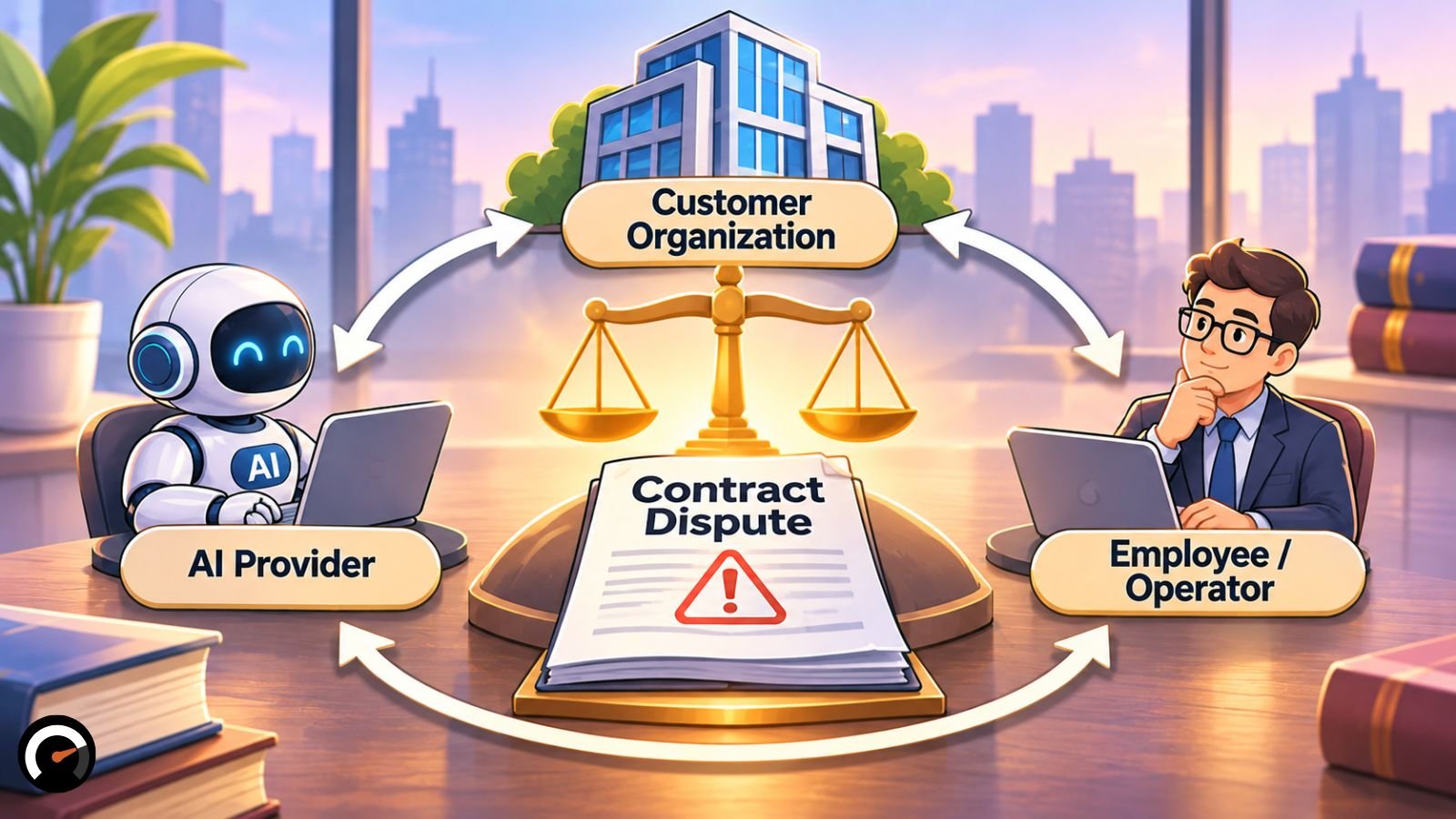
Three relationships are in play, and they are easy to confuse:
| Relationship | Main question |
|---|---|
| Customer and third-party vendor | Is the customer bound by what the agent accepted? |
| Customer and AI provider | Who bears loss from the agent’s actions under their agreement? |
| Employer and employee or operator | Did the person have authority to commit the organization? |
An authority clause is a representation about the signer’s power. A disclaimer limits a party’s responsibility, and an indemnity obligates one party to compensate another. They do different jobs.
Contract terms are a starting point, not the whole answer. Proskauer notes that early agentic products often disclaim responsibility for their actions and seek indemnification, subject to doctrines such as unconscionability and consumer protection law. Absent customer-friendly terms, the user may bear much of the risk.
In Moffatt v. Air Canada (2024 BCCRT 149), a British Columbia tribunal held the airline liable for its website chatbot’s misinformation, as the American Bar Association reports. It is a Canadian small-claims decision on negligent misrepresentation, not binding in the US and not a contract-formation ruling.
Website terms and AI agents: Amazon v. Perplexity
Platforms are writing terms aimed at agents. Amazon alleged that its Conditions of Use, including its Agent Terms, govern how customers deploy AI agents.
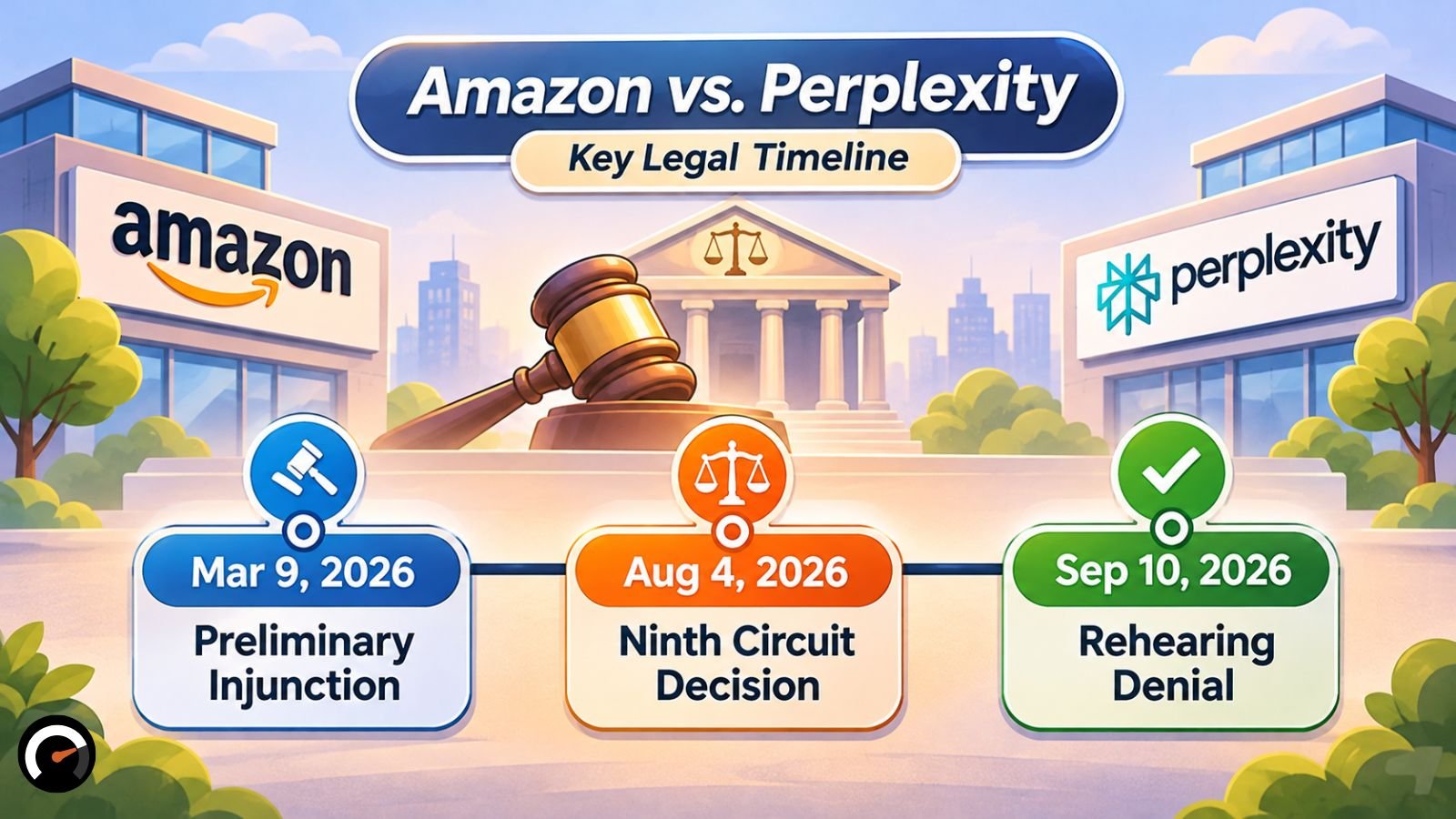
The litigation is a computer-access case, not a contract-formation case. A district court granted a preliminary injunction on March 9, 2026. On August 4, 2026, the Ninth Circuit vacated it, finding Amazon unlikely to succeed on the “access” element of its federal and California computer-access claims. On that record the user, not Perplexity, was accessing Amazon, and the court declined to decide whether a different record could show otherwise.
The decision did not address whether an AI agent can accept contractual terms for its operator or employer. According to Eric Goldman’s blog, a footnote says the outcome does not impair Amazon’s ability to regulate access through private terms of service, and Cooley cautions that AI developers should not treat the decision as foreclosing contract-based claims. The Ninth Circuit denied rehearing en banc on September 10, 2026, and the case was remanded.
A checklist before an agent accepts terms
This is an editorial framework, not a legal test.
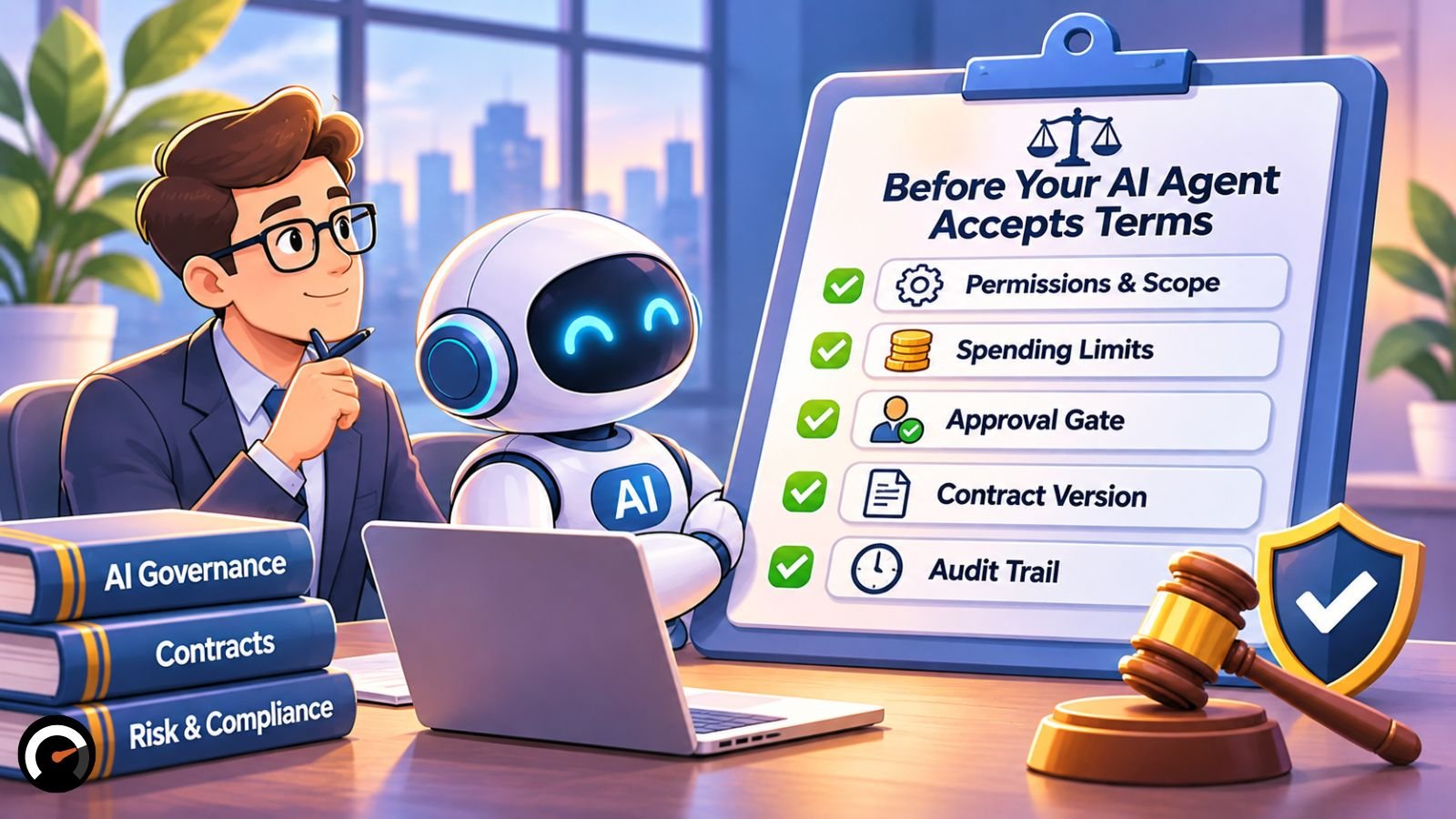
- Who is the account holder, and did that person have authority? Confirm the signer can commit the organization.
- What was the agent allowed to do? Set value limits, approved counterparties, and the actions that need human approval. The autonomy scale in this enterprise agent framework is one way to decide how much an agent may do alone.
- Can you reconstruct what happened? Log the instruction, the terms version shown, and evidence of assent. Record both the agent and the person who authorized it. Delegation rather than impersonation keeps both identities in the trail.
- What do the terms say? Check responsibility for agent actions, disclaimers, indemnity and liability caps at both the AI provider and the vendor whose terms the agent accepts.
- Can permissions be revoked quickly? Make sure the agent cannot expand its own permissions or tool access.
Frequently asked questions
Q. What does “authority to bind” mean in terms of service?
The person accepting represents that they can legally commit their organization to the agreement. The clause does not prove they can.
Q. Can an AI agent click “I agree” for me?
US law generally allows contracts to form through electronic agents when the action is attributable to you. Whether it binds you depends on your instructions, the circumstances and the terms.
Q. Does technical ability to click equal legal authority?
No. An agent’s permissions and the organization’s legal authorization are separate questions.
Q. What should a company log when an agent accepts terms?
The instructions given, the terms version shown, what was accepted and when, and who configured the agent. These help establish attribution and what the vendor could reasonably believe.
Q. Does this apply outside the US?
Not necessarily. A University of Queensland paper discusses Australia’s electronic-transactions rules and a UN convention article on automated message systems. Check local law.
Related: Enterprise Knowledge Base Building Methodology for AI Agents: 8 Steps
| Disclaimer: This article is for informational and educational purposes only and does not constitute legal advice. It covers US law, which is unsettled on how electronic-contracting and agency rules apply to AI agents. Organizations should consult qualified counsel in their jurisdiction before relying on it. |
Test this on a real task
The audit is free and takes about ninety seconds. It returns a verdict, a readiness score and the supervision the task would need.
Run the audit