
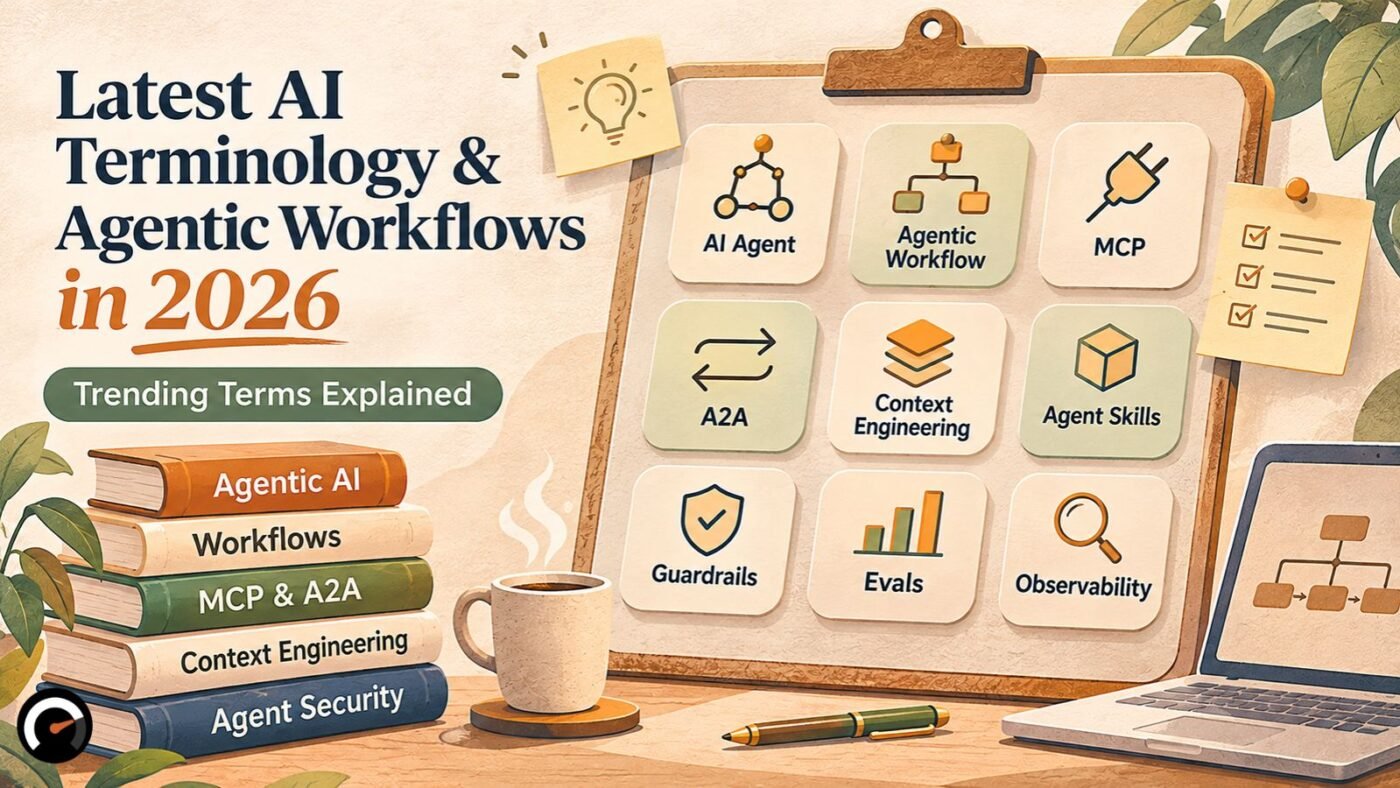
Agentic AI terminology is the vocabulary for AI systems that pursue a goal across several steps, using tools and making choices along the way. It also covers the protocols and controls around those systems. Vendors and writers use these words loosely, and that makes build-or-buy conversations harder than they need to be.
Two engineers can say “agent” in the same meeting and mean different things. In Building effective agents, Anthropic’s engineering team notes that some people use the word for fully autonomous systems, while others use it for implementations that follow predefined workflows. Anthropic groups both under “agentic systems” but still draws a line between workflows and agents.
This guide groups terms by what they do rather than alphabetically. It also labels how settled each term is as of November 13, 2026.
Agentic AI, AI agent, and agentic workflow
What each term means
Agentic AI describes systems that pursue goals through decisions and actions, not just generated responses. That separates it from generative AI, which produces content when prompted but doesn’t act on its own. An AI agent, by contrast, is a working implementation: a model plus tools, instructions, and an execution loop.
Agents differ in how much freedom they get. Some run alone between checkpoints, while others stop for approval before anything important. Many teams set autonomy levels per workflow. They start with suggestions only and give the agent more room as its track record grows.
Agentic workflow is the loosest of the three terms. In Anthropic’s framework, workflows orchestrate LLMs and tools through predefined code paths, while agents “dynamically direct their own processes.” The real question is who controls the path: your code or the model. Many vendors use “agentic workflow” for any multi-step AI process. That usage is fair, but it isn’t Anthropic’s meaning.
Workflows, agents, and hybrids
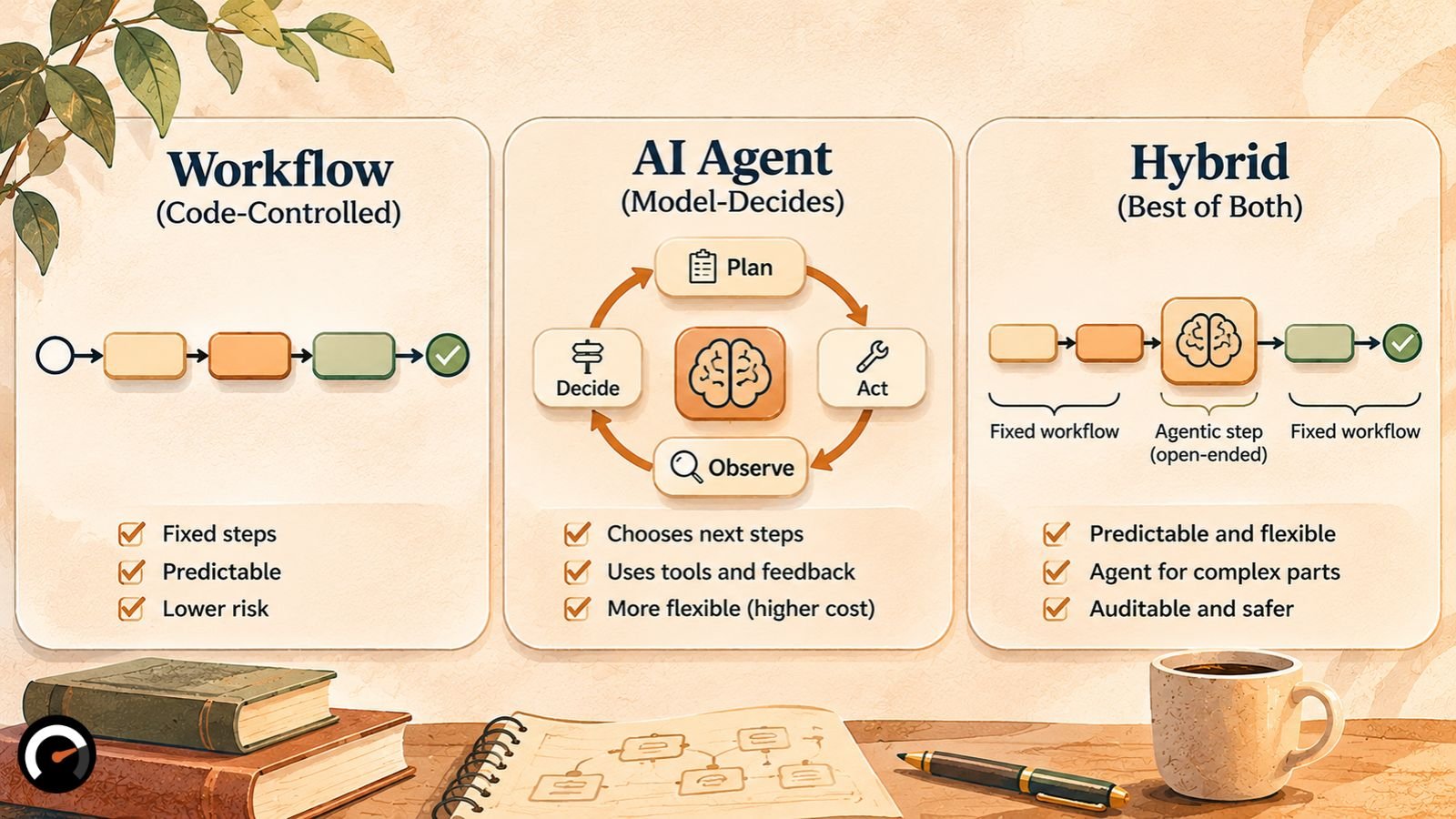
The choice has consequences. Workflows give you predictability on well-defined tasks. Agents earn their keep when you need flexibility and model-driven decisions at scale, but they add latency and cost, so the extra freedom has a price.
In practice, most production systems mix the two. A fixed outer workflow keeps behavior predictable and auditable, and agentic steps handle whatever you can’t specify in advance. For example, a ticket-routing workflow can hand one open-ended research step to an agent and then rejoin the fixed path.
How an agent works
The loop, tools, and computer use
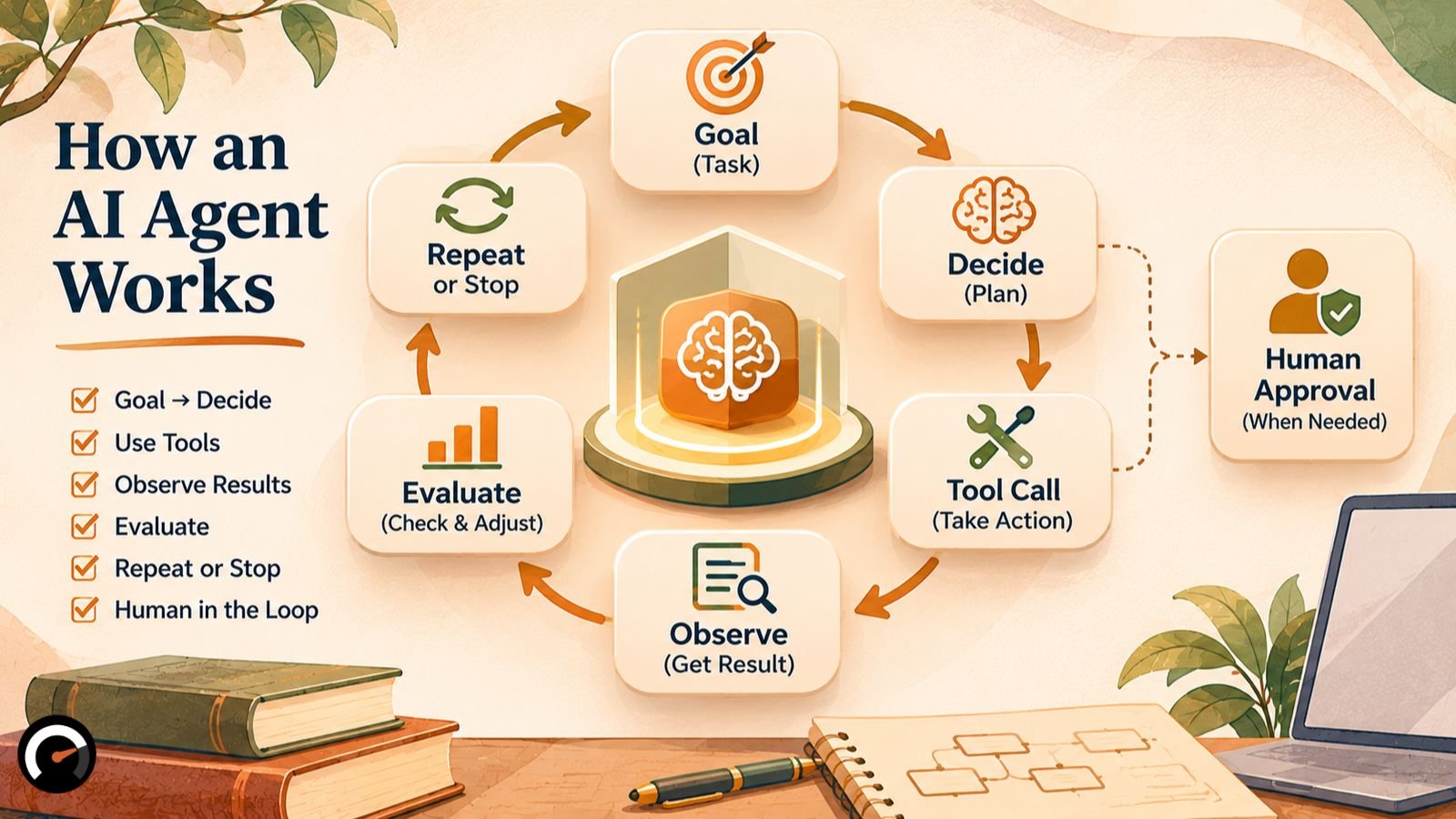
- Agent loop: On each pass, an agent checks its state, picks an action, reads the result, and decides what comes next. Planning, retries, and stopping rules differ by implementation, so a common shorthand is observe, decide, act, evaluate. In its context engineering post, Anthropic settles on a simple definition: LLMs autonomously using tools in a loop.
- Tool use and function calling: Tool use means the agent calls outside capabilities such as search, databases, APIs, or code execution. Function calling is one interface for that. The model returns structured arguments, then the application runs the function and passes back the result.
- Computer-use agent: Instead of calling APIs, this kind of agent operates a browser or desktop by viewing the screen, clicking, and typing.
Memory, context, and retrieval
- Context window and memory: The context window holds the text a model can consider in one call. Memory spans steps or sessions. Short-term state sits in the current context, while persistent memory lives outside it and returns only when the system retrieves it. Recall therefore depends on how you build retrieval.
- RAG and grounding: Retrieval-augmented generation (RAG) fetches material from external sources, such as an enterprise knowledge base, and hands it to the model as context. That can improve accuracy, but it can’t guarantee the sources are right or that the answer represents them faithfully. Grounding ties output to identifiable information instead of generated text alone.
Context engineering
Context engineering is one of the newer terms here. In Effective context engineering for AI agents, Anthropic’s applied AI team defines it as curating what goes into the limited context window from a constantly evolving universe of possible information. The September 2025 post presents it as the next step beyond prompt engineering. The reason is that agents running across many turns manage the whole context, not just the instructions, and prompts become one piece of that context.
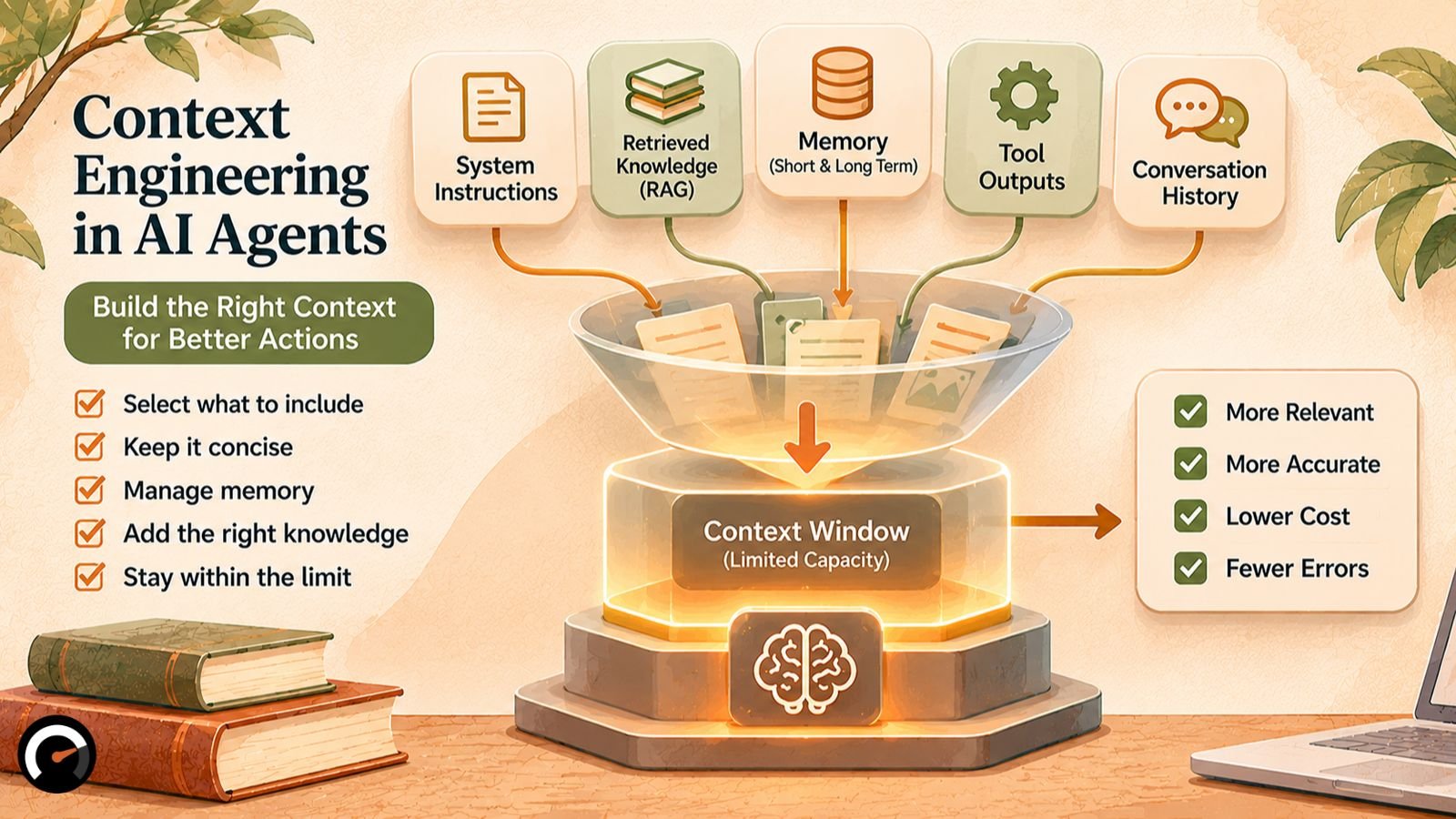
For long tasks, the post describes compaction: summarizing a conversation near the window limit and restarting from the summary. Agents can also keep notes outside the window and read them back after a reset, or hand focused tasks to subagents with clean contexts.
Gartner’s closest enterprise term is AI context platforms, one of its Top Strategic Technology Trends for 2027, published October 20, 2026. Gartner describes them as systems that give agents the knowledge they need to interpret inputs, make decisions, and act in line with business objectives. Treat it as analyst vocabulary that’s still forming.
Architecture and coordination
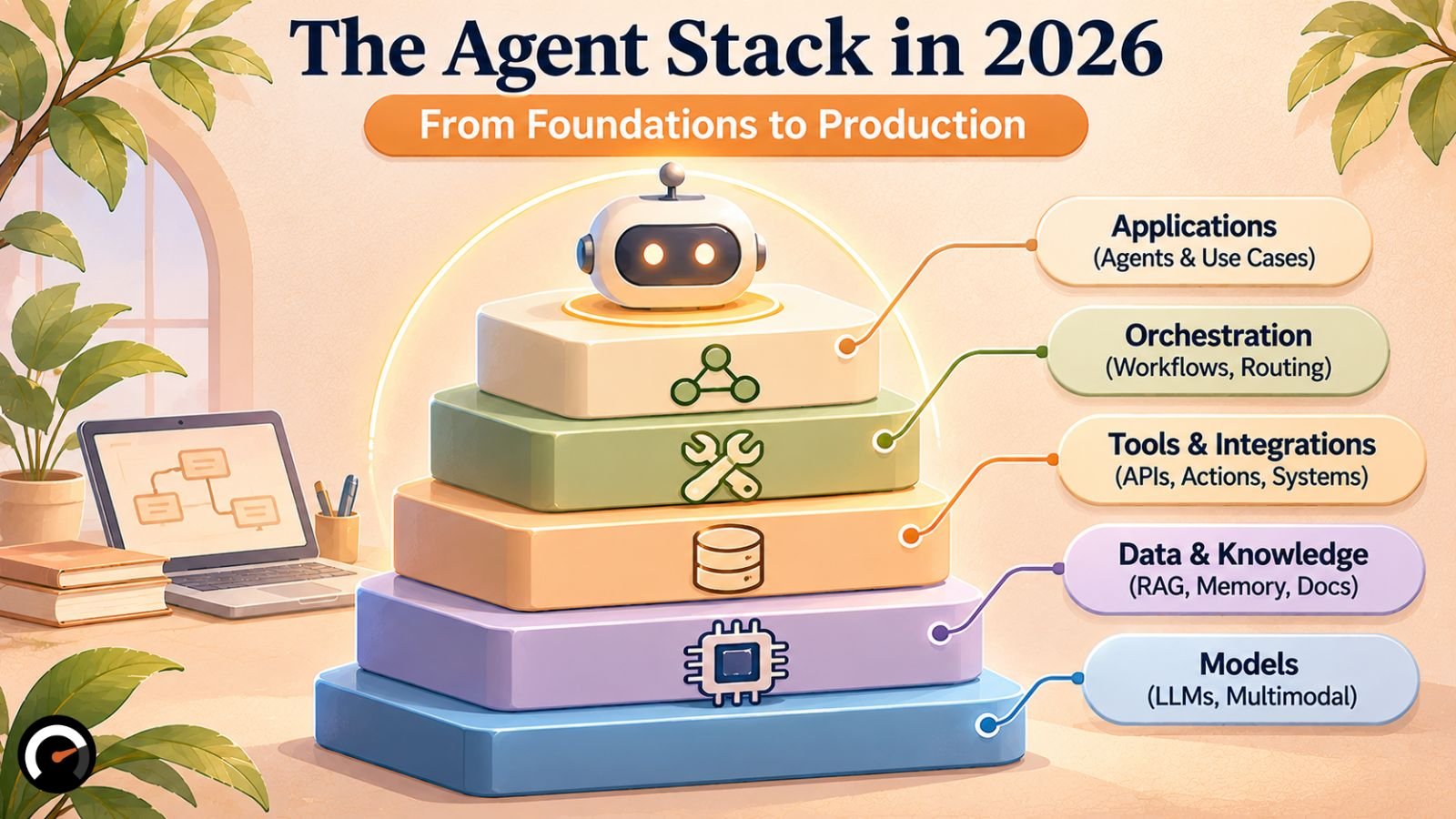
Orchestration and multi-agent terms
- Orchestration: Coordinating agents, tools, models, and workflows to finish a task. Orchestration decides what runs, what each part receives, how results combine, and when to stop or ask a human.
- Multi-agent system, orchestrator, subagent: A multi-agent system has several agents working on one problem. An orchestrator assigns the work, and a subagent takes one focused task, often with a fresh context.
- Handoff: Passing a task from one agent to another, or from an agent to a human, along with the instructions, state, and context needed to continue.
Harnesses, skills, and durability
- Agent harness: The software around a model that turns it into an operating agent. It manages the loop, tool access, context, state, permissions, and stopping conditions. Two products built on the same model can behave differently because their harnesses differ. Gartner uses a narrower term, “AI coding agent harness”: a closed-loop control system that governs autonomous developer behavior across the software development lifecycle.
- Agent skills: Reusable packages of instructions, scripts, and reference files that an agent loads when a task calls for them. A skill is a folder built around a SKILL.md file. It teaches a procedure, while a tool gives the agent a live capability. Anthropic launched Agent Skills in October 2025, released the specification as an open standard on December 18, 2025, and moved it to AAIF in October 2026.
- Durable execution: Saving an agent’s progress as it runs, so a long task can resume after a crash or API timeout instead of starting over and paying for the same tool calls twice. Checkpointing is the usual mechanism, and replay re-runs saved steps to debug or recover.
Anthropic’s five workflow patterns
Anthropic’s guide names five workflow patterns:
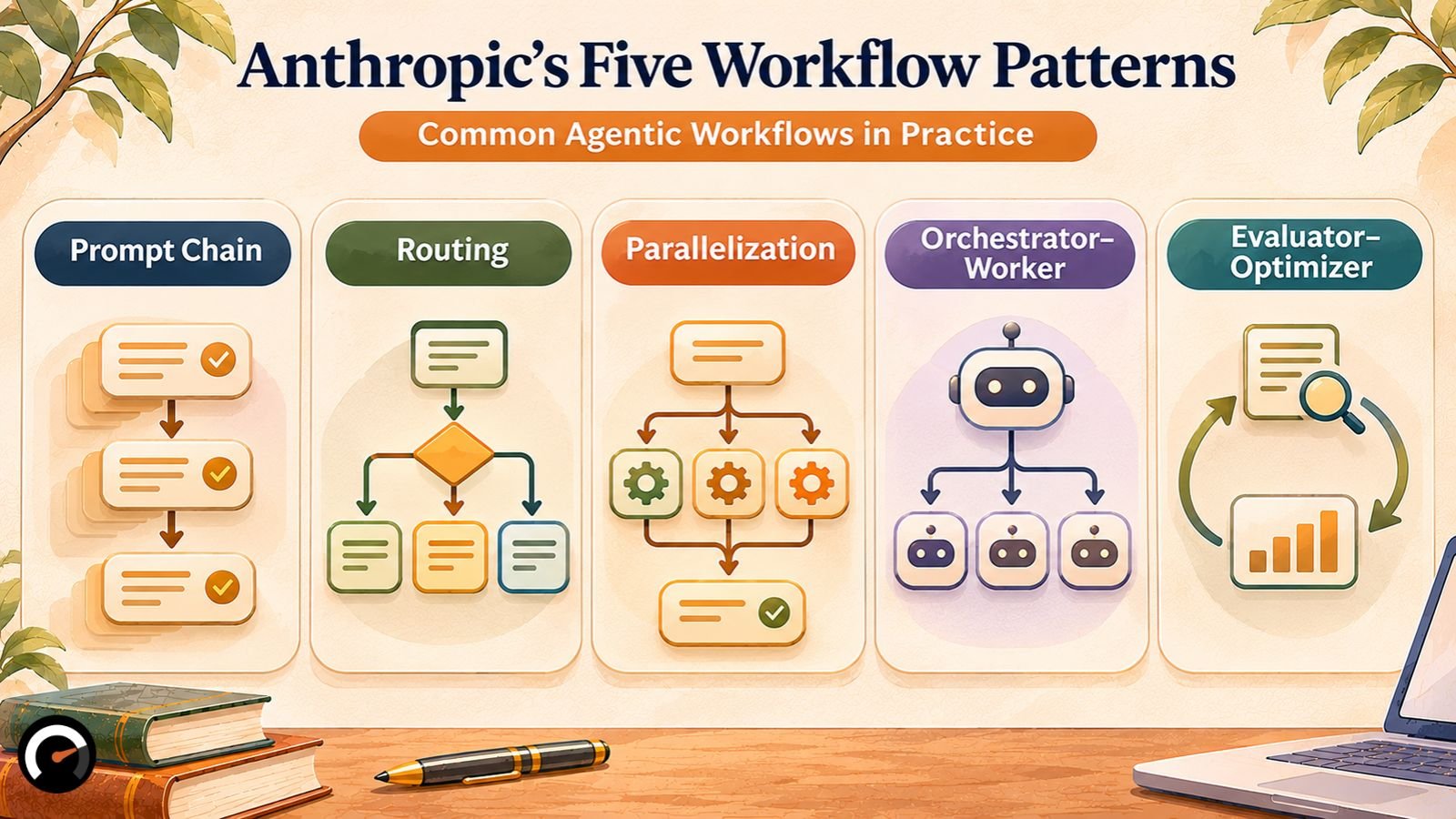
- Prompt chaining runs steps in sequence.
- Routing sends an input to a specialized handler.
- Parallelization runs subtasks at once or compares several outputs.
- Orchestrator-workers lets a central model delegate to worker models.
- Evaluator-optimizer pairs a generator with a critic.
Naming the exact pattern says more than calling everything “multi-agent.”
Interoperability: MCP, A2A, and AGENTS.md
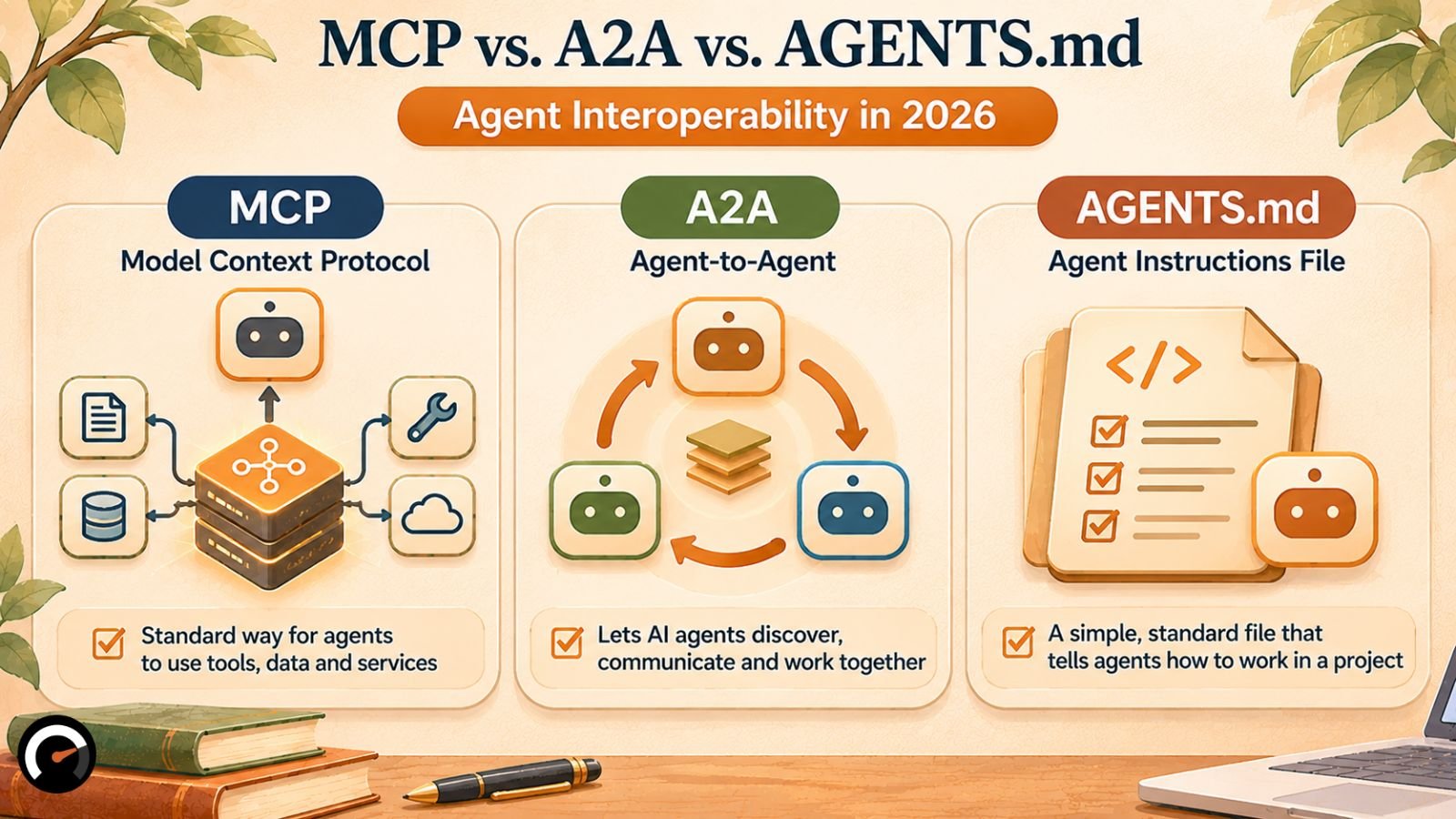
These three show up together but solve different problems. MCP connects an AI application to tools and data, A2A connects independent agents, and AGENTS.md gives coding agents their project instructions.
Model Context Protocol (MCP)
MCP (Model Context Protocol) is an open protocol that connects AI applications to external systems. Servers expose tools, resources, and prompts, and the protocol governs how clients and servers talk, not how an agent reasons.
The 2026-07-28 revision is one of the biggest overhauls since MCP launched. It made the core stateless, tightened authorization, and added a formal extensions framework. It also deprecates Roots, Sampling, and Logging, and Tasks joins MCP Apps as an extension. Deprecated features must stay available for at least twelve months before removal. Some changes still break backward compatibility, so check which version your clients and servers support.
A2A
A2A (Agent2Agent) is an open protocol that lets independent agents discover each other, exchange messages, and coordinate tasks across platforms. Agents advertise what they can do through “Agent Cards.” Version 1.0, released in March 2026, lets an agent sign its card so a caller can verify who published it before trusting it.
AGENTS.md and skills
AGENTS.md is an open Markdown convention that gives coding agents project instructions: repository structure, coding standards, and test commands. It supplies working context, so it isn’t a communication protocol. Skills pair naturally with MCP: MCP carries an agent’s calls to tools and data, and a skill teaches the agent how to use them for a task.
AAIF
AAIF (Agentic AI Foundation) is a governance body, not a protocol. Anthropic announced on December 9, 2025 that it would donate MCP to AAIF, a Linux Foundation-directed fund that Anthropic, Block, and OpenAI co-founded. The founding projects were MCP, Block’s goose, and OpenAI’s AGENTS.md.
Google created A2A, the Linux Foundation hosted from 2025, and AAIF announced it as a hosted project on August 17, 2026. On October 22, 2026, AAIF added four more hosted projects: Agent Skills, Open Responses, OpenEnv, and OpenSandbox. Counting agentgateway and Agent Router, which were already in the portfolio, brought the total to ten. The A2A move changed who governs it, not what it does, so MCP and A2A keep separate specifications and roles.
Security, trust, and control
Oversight: HITL, HOTL, and guardrails
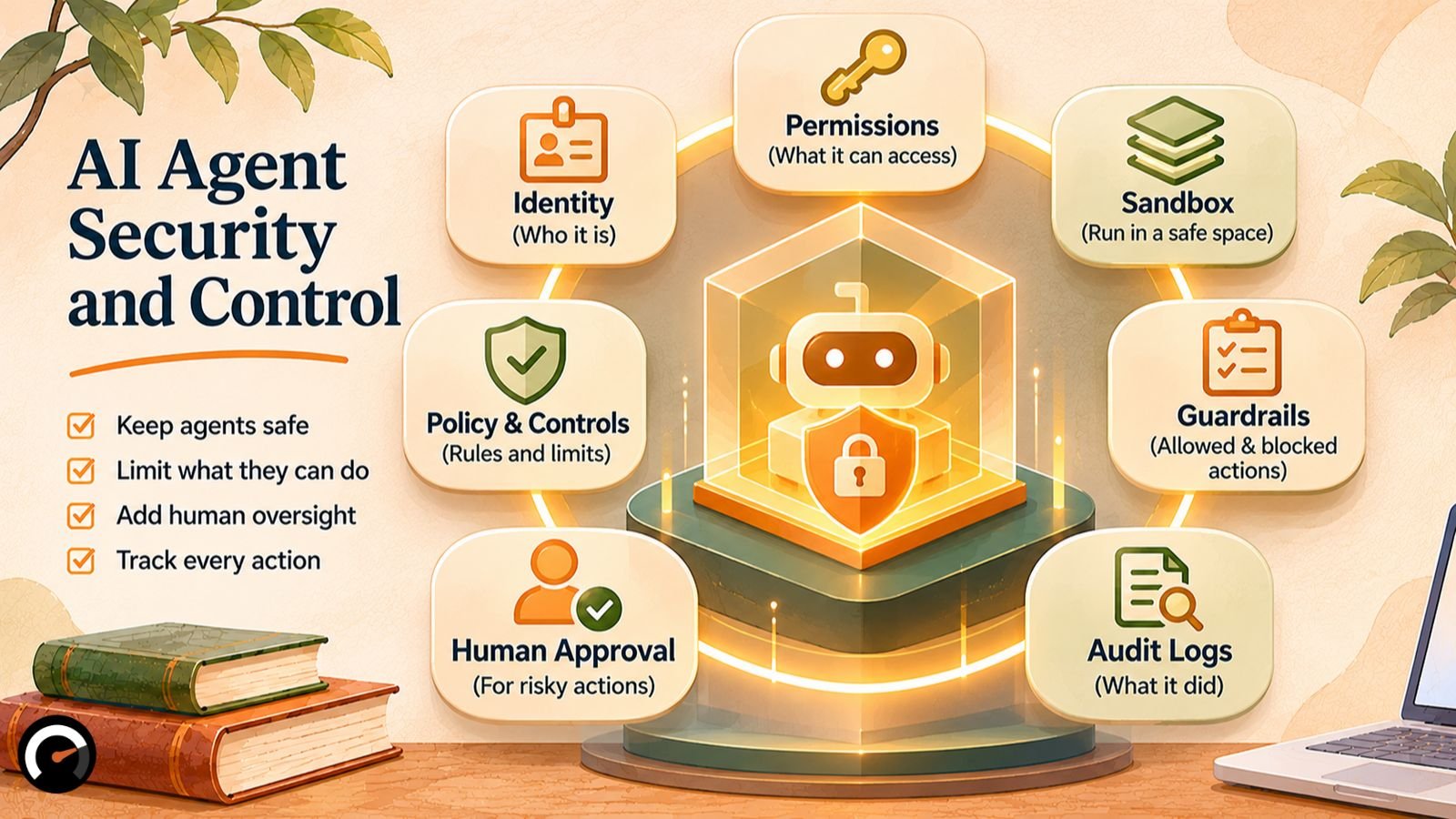
- Human-in-the-loop (HITL): A person reviews or approves certain actions before they take effect.
- Human-on-the-loop (HOTL): A person monitors agents while they run and can step in or stop them, but doesn’t approve each action. Teams often reserve HITL for the riskiest steps and use HOTL for the rest.
- Guardrails: Rules or checks that limit what an agent may do or output, such as a cap on refund amounts or a block on emailing outside domains.
Isolation and permissions
- Prompt injection: An attack that hides malicious instructions in user input or outside content to make an agent ignore its instructions or take unauthorized actions. Agents face more exposure than chatbots because they read external content and act on connected systems.
- Sandboxing: Running an agent’s code or actions in an isolated environment with limited access to files, networks, and system resources, so one bad action does limited damage. AAIF now hosts OpenSandbox, which covers secure execution sandboxes.
- Least privilege: Giving an agent only the permissions its task needs. An agent that reads customer records, for instance, shouldn’t automatically get to change or delete them.
- Read tools versus action tools: Read tools only fetch information. Action tools change something, such as sending an email, editing a record, or moving money. Because action tools carry a larger blast radius (the damage one mistake can cause), teams often give them tighter approvals and permissions.
Identity and authorization
Three separate ideas sit inside agent identity and authorization. Identity establishes which agent makes a request, authentication verifies that claim, and authorization decides what the agent may do.
Authorization also has a legal side. Vendors’ terms of service already ask whoever accepts them to confirm they can bind their organization. That raises a new question about the authority to bind an organization when an agent is the one clicking “accept,” and about who answers for it.
Identity is the least settled area, and the work is still at the proposal stage. On February 5, 2026, NIST’s NCCoE released a draft concept paper on software and AI agent identity and authorization. It outlines a possible project, not a standard. Later that month, NIST’s Center for AI Standards and Innovation launched its AI Agent Standards Initiative to foster industry-led standards for interoperable, secure agents. It isn’t a finished standard either.
A2A’s signed Agent Cards address one narrow piece of the same problem. Gartner’s 2027 trend list also includes AI agent identity, which ties models, prompts, and credentials to agent actions. Gartner forecasts that by 2028, 25% of enterprise security breaches will trace back to AI agent abuse.
Evaluation and production
Knowing how an agent works is only half the vocabulary. The other half covers how teams check that it works reliably.
Evals and cost per task
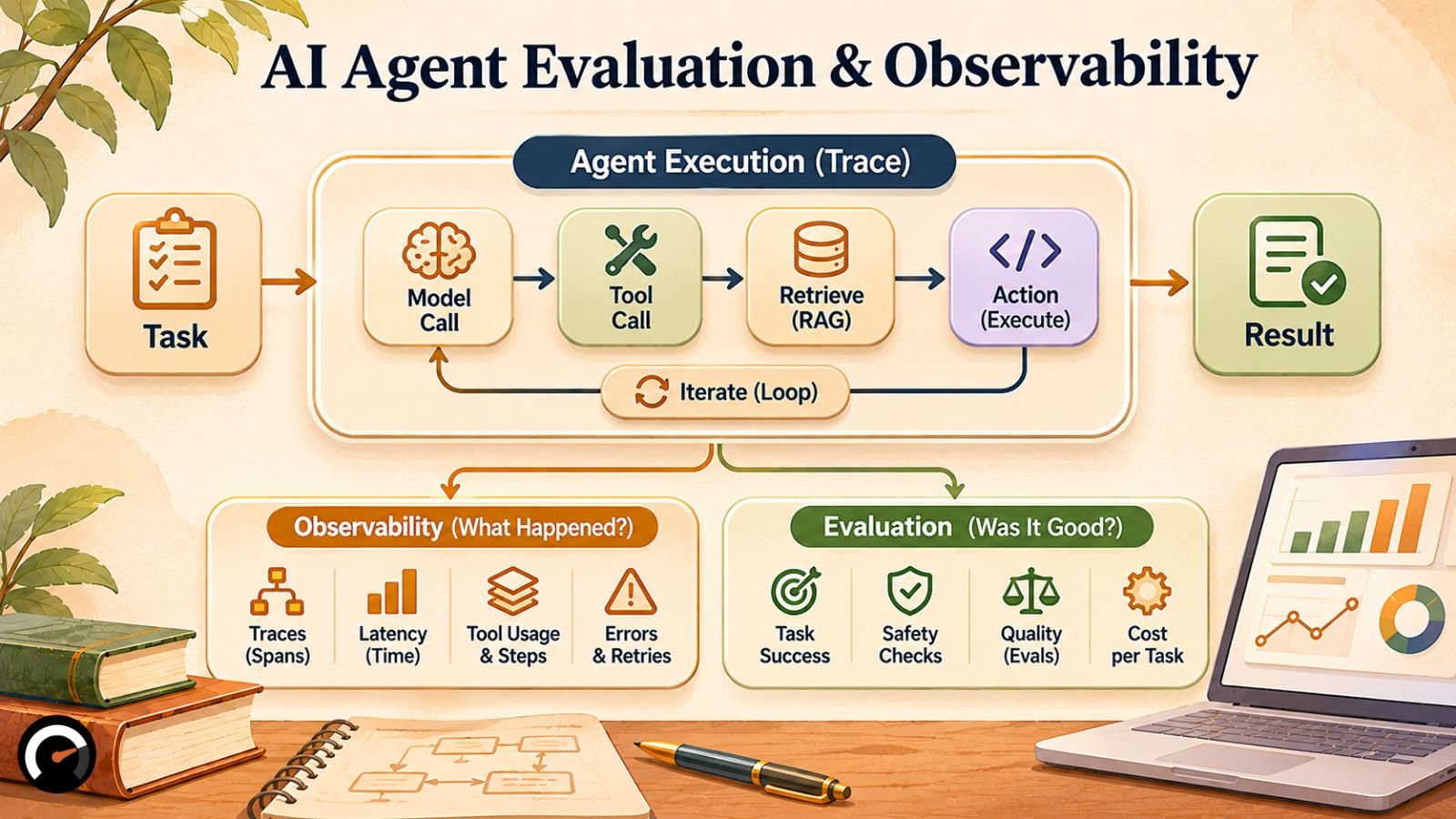
- Evals: Tests that run an agent against defined tasks and criteria. They can measure task completion, accuracy, tool selection, reliability, safety, and cost.
- Cost per task: Agent loops can multiply model calls unpredictably, so some teams track cost per completed task instead of cost per token. The metric counts retries and failed runs, so it shows what a finished outcome really costs.
Observability and tracing
Observability lets you inspect what an agent did: its behavior, tool calls, errors, and resource use. Tracing records each step of a run, including model calls, tool executions, handoffs, and results, so teams can read a trace to find out why a run failed. Popular tracing options include LangSmith, Phoenix, and Weave, and each takes a different approach to hosting and integrations.
Terms to treat with caution
Agent washing
Gartner put “agent washing” into wide use in a June 25, 2025 press release. It used the term for rebranding existing products, such as AI assistants, robotic process automation, and chatbots, without substantial agentic capability. In the same release, Gartner estimated that only about 130 of the thousands of agentic AI vendors are real. It also forecast that over 40% of agentic AI projects will be canceled by the end of 2027 because of escalating costs, unclear business value, or inadequate risk controls. Those are analyst estimates, not measured outcomes.
A five-question check for “agentic” claims
These questions classify a product’s architecture. They’re an editorial framework, not a certification test.
- Does it iterate based on results? A system that makes one fixed pass from input to output rarely counts as an agent under Anthropic’s definition.
- Does it use tools? Ask which outside systems it can actually call.
- Who decides the next step? If the vendor’s code sets the path, you’re buying a workflow. That can be the right purchase, but the label is wrong.
- What happens when it goes wrong? Ask about limits, approval steps, and logs.
- Does the task need an agent at all? Gartner Senior Director Analyst Anushree Verma warned that many use cases positioned as agentic today don’t require agentic implementations. A fixed workflow, a human-reviewed hybrid, or plain human work may fit better. A task-level audit that scores repeatability, judgment, and risk gives you a structured way to decide.
A product that fails the first three questions may be an assistant, chatbot, or conventional automation. Many systems also blend fixed workflows with model-driven steps, so judge the architecture rather than the marketing.
Quick reference
Maturity reflects an editorial judgment as of November 13, 2026, based on four criteria: whether a public specification exists, whether a standards body or foundation governs it, how stable it has been lately, and how consistently vendors use the term. It isn’t an industry rating.
| Term | Plain meaning | Maturity |
|---|---|---|
| Agent loop, tool use, RAG | Core mechanics | Established concepts |
| Workflow vs. agent | Who controls the execution path | Established distinction; definitions vary |
| Context engineering | Curating what the model sees | Established, evolving practice |
| Context platforms, coding agent harness | Enterprise context and control layers | Analyst vocabulary (Gartner, October 2026) |
| Harness, orchestration, handoff | Runtime and coordination around a model | Common terms; usage varies by vendor |
| Durable execution, HOTL, cost per task | Resilience, oversight, and spend measures | Established practice; wording varies |
| Agent skills | Packaged instructions loaded on demand | Open specification under AAIF |
| MCP | Agent-to-tool connections | Published protocol; major revision in July 2026 |
| A2A | Agent-to-agent coordination | Stable v1.0 since March 2026; AAIF project since August 2026 |
| AGENTS.md | Project instructions for coding agents | Open convention |
| AAIF | Open-source governance body | Ten projects as of October 2026 |
| Evals, tracing, sandboxing | Testing, inspection, isolation | Established engineering practice |
| Agent identity | Authentication and permissions for agents | Emerging; NIST work at concept stage |
| “Agentic” as a product label | Often marketing | Check actual capabilities |
If you learn only three terms first, make them workflow versus agent, context engineering, and evals.
FAQs
Q. What is the difference between MCP and A2A?
MCP connects an AI application to tools and data, while A2A connects independent agents to each other. Both now sit under AAIF, with separate specifications.
Q. What is the difference between an AI agent and an agentic workflow?
An agent chooses its own next steps, while a workflow follows a path your code sets. Some vendors blur the two, so ask who controls the path.
Related: AI and Digitalization: Differences, Benefits & How They Work Together
| Disclaimer: We strive to provide accurate and up-to-date information. This guide is for informational purposes only. AI terminology, technologies, and standards may change over time. Readers are encouraged to verify the latest details through official sources. |
Test this on a real task
The audit is free and takes about ninety seconds. It returns a verdict, a readiness score and the supervision the task would need.
Run the audit